Five Days Out, Looking for a Way Out
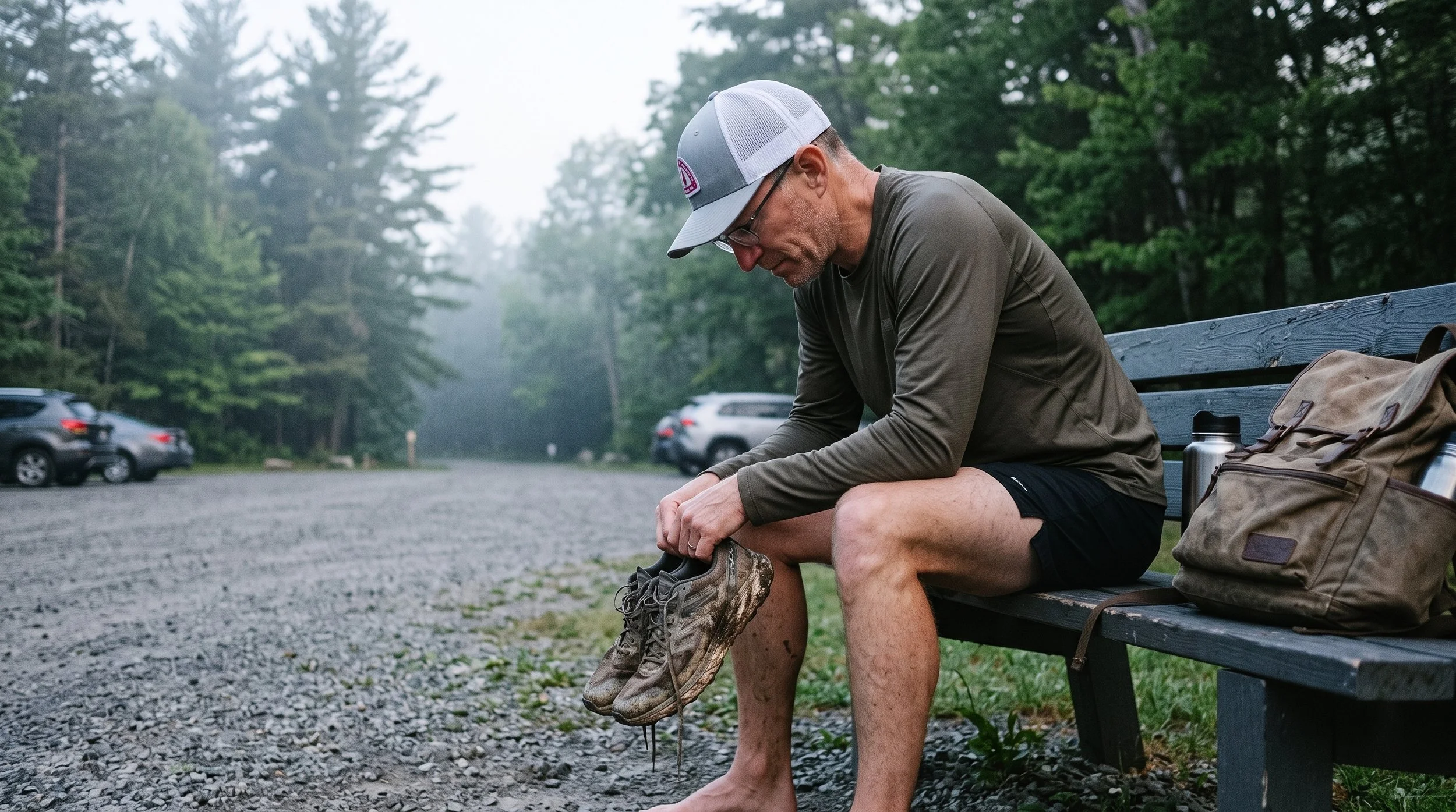
Today is five days out from the Superior 100. And for about the last week, I’ve caught myself doing something a little embarrassing.
I’ve been looking for a way out.
Not consciously. Not in any way I’d admit to out loud until just now. But it’s there. A twinge in my knee on a walk to the mailbox. A strain in my back when I bend over to tie my shoes. And somewhere underneath it, a quiet little voice running the numbers: would that be enough? Would that get me out of this, and let me save face while I do it?
I want to be clear: nothing is actually wrong with me. My knee is fine. My back is fine. But taper week has a way of turning every normal ache into evidence, like my body is building a legal case for why I shouldn’t have to do the thing I’ve spent months training to do.
The taper does something to your head.
For months, training was the thing that kept the anxiety quiet. There was always another long run to think about, another hill to climb, another week of the plan to execute. The work absorbed the nervous energy.
Then you taper, and the work goes away. The runs get short. The days get long. And all that energy that used to go into training has nowhere left to go except into your head, where it turns into anticipation, and anxiety, and yes, the search for an exit.
I’ve heard this before
I brought this up with a few other runners recently, half expecting them to look at me funny. Instead, every single one of them nodded. Turns out this is close to universal. The names change, the injuries change, the excuses change, but the pattern doesn’t. Something in us starts hunting for a reason, any reason, that lets us walk away from the start line with our dignity intact.
Once I heard how normal it was, it got easier to laugh at. Not to ignore. To laugh at.
Letting the thought pass through
What I’ve settled into isn’t fighting the thoughts. I don’t think you can argue your way out of a feeling like this. What works better is noticing it. Naming it. Oh, there’s the anxiety again, dressed up as a knee injury. And then just letting it sit there for a minute instead of grabbing onto it and running with it.
I picture it almost physically. The thought shows up, I let it exist, and then I move it along, the way you’d let a car pass on a two-lane road instead of trying to race it. It doesn’t need to win. It just needs to pass through.
This isn’t really about a hundred miles.
I think this is true for anyone standing at the edge of something they’ve worked hard for, whether that’s a hundred-mile race, a first 10-miler, or something that has nothing to do with running at all. The closer you get to what you want, the louder the voice gets, offering you a way to avoid finding out if you can do it.
I don’t have some tidy answer for how to make that voice disappear. I’m not sure it ever fully does. But I’ve found that just seeing it clearly, calling it what it is, and letting it pass through instead of building a case around it, is enough to keep walking toward the start line instead of away from it.
Five days out. Knee’s fine. Back’s fine. See you at the start.