The People Who Keep You Moving
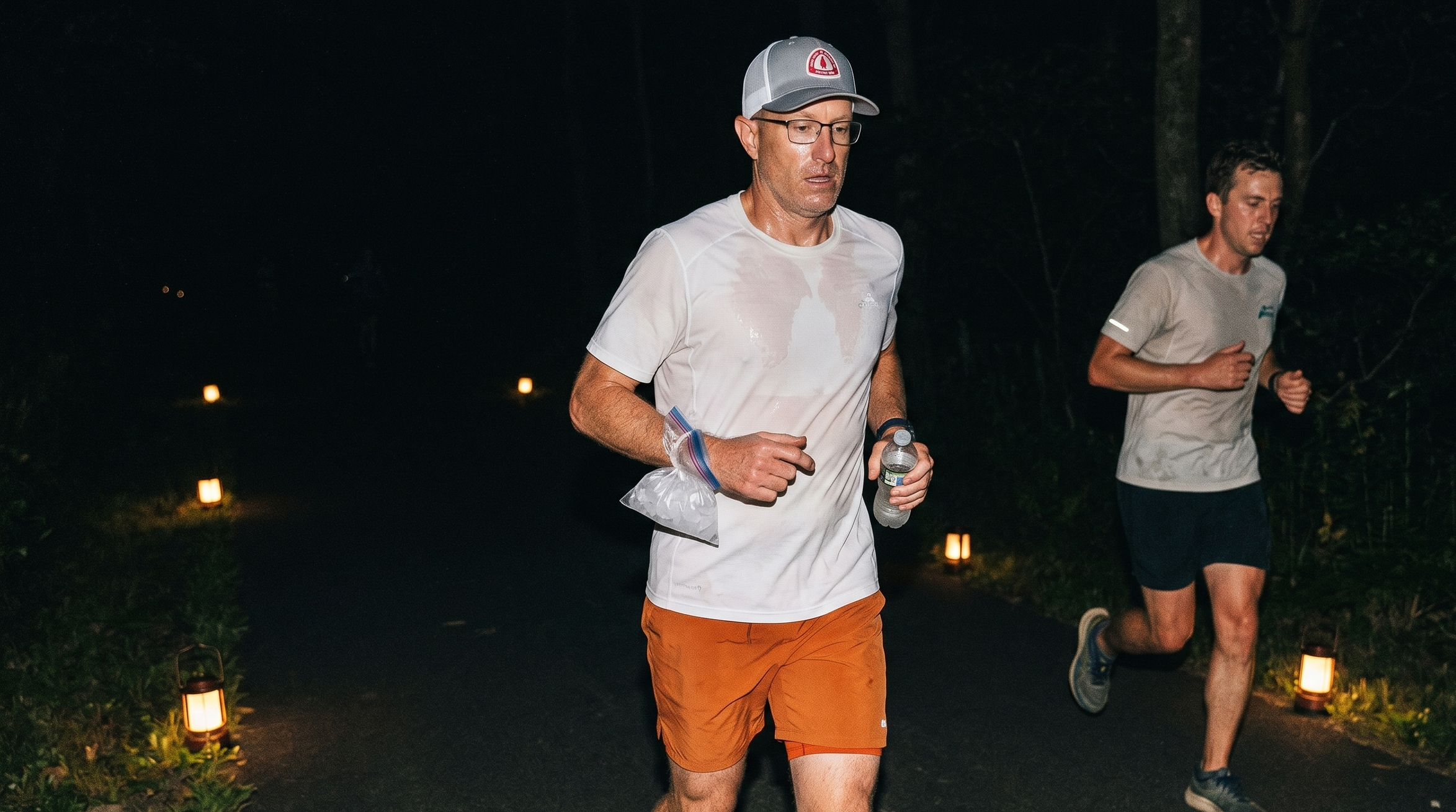
A race recap of the FANS 24-Hour Endurance Event — Bloomington, MN
A 2-mile loop doesn’t sound like much. But when you’re running them back-to-back through a June night in Bloomington, Minnesota — 86 degrees, air so thick it has a texture — each one starts to feel like a negotiation. A conversation between what you planned to do and what the day is actually asking of you.
I went into FANS with a goal of 80 miles. I finished with 100 kilometers (63 miles). And I’m already thinking about next year. (Sorry - 100 Km sounds better)
The heat changes everything.
The plan didn’t survive contact with the temperature. It rarely does at FANS, but 86 degrees in June has a way of making every decision feel urgent. I adjusted early — food and water every loop, no exceptions. A bag of ice on my wrist to keep the core temperature from climbing. It sounds strange until it works, and it worked.
The harder moment came mid-afternoon. Dark urine. The kind of thing that stops you cold. I made a quiet decision right there: walk the next two laps and drink as much water as possible. My kidneys responded. My legs did not. The walking did what it needed to do and then refused to become running again. Momentum is a fragile thing at hour twelve of a 24-hour race. Once you lose it, you have to rebuild it from scratch — and that rebuilding, it turns out, requires other people.
The friends & family show up
My daughter Rylee was there at 7 a.m. She volunteered through 2:30, got in a few loops alongside me, and kept the energy moving early when everything felt manageable. Then she went home.
And then, somewhere deep in the night, she checked the tracker on her phone. Noticed I wasn’t moving. Got out of bed, got back to the course, and kicked my butt back into gear.
That’s not something you ask someone to do. That’s something they do.
Warren and Eric arrived at exactly the right loops — the kind of timing that feels accidental but lands like it was planned. Rick ran quality time with me out there, then quietly snuck in an extra loop on me. I still haven’t forgiven him. And seeing familiar faces on the course — people who know what this kind of effort costs — that matters in ways that are hard to explain when you’re not in the middle of it.
Each appearance hits differently at that point in a race. You’re not just happy to see them. You need them. And the difference between those two things is the whole story.
The night was shorter than I thought
I expected the overnight hours to drag. They didn’t. The dark compresses time in a way the daylight doesn’t. The laps kept coming. The course kept moving under my feet. At some point, I looked up, and the sky was changing, and I realized I’d been moving through the night without really noticing it go by.
That part surprised me. It was the one thing I hadn’t anticipated.
During: done, finished, never again.
There were hours — real, long hours — where all I wanted was to be done. Not just done with the race. Done with this whole thing. The training, the loops, the self-inflicted suffering. I thought about hanging it up. Thought about what it would feel like to stop doing this to myself and spend my weekends differently.
That’s not dramatic. That’s just what 86 degrees and 15 hours does to your perspective. The body gets loud and starts making promises the mind hasn’t agreed to.
A week later
I miss it.
A week out from the race, I want to sign up again. That flip — from never again to already planning — is something I’ve come to recognize as the truest signal that a race was worth it. You don’t get that feeling from the easy ones.
I’m three months out from the Superior 100. Ninety days from the longest thing I’ve attempted since Zumbro in 2016. FANS didn’t go the way I planned. But it taught me something I needed to know heading into September: I can get through hard things, especially when the right people show up.
What friends actually do
Doug put on a great race for his first time as race director. The event ran clean, the course was well supported, and the community that shows up for FANS is one of the better ones in this sport.
But what I keep coming back to isn’t the miles, the heat, or even the 100k finish. It’s Rylee driving back at midnight. It’s Warren and Eric showing up mid-race. It’s the faces on the course that pull you forward when your own legs have stopped cooperating.
Friends don’t just make hard things easier. They make hard things possible. That’s what I’m carrying into the next ninety days — and come September, out onto the Superior Hiking Trail.
See you at the start line.