What Race Directors Are Actually Thinking About
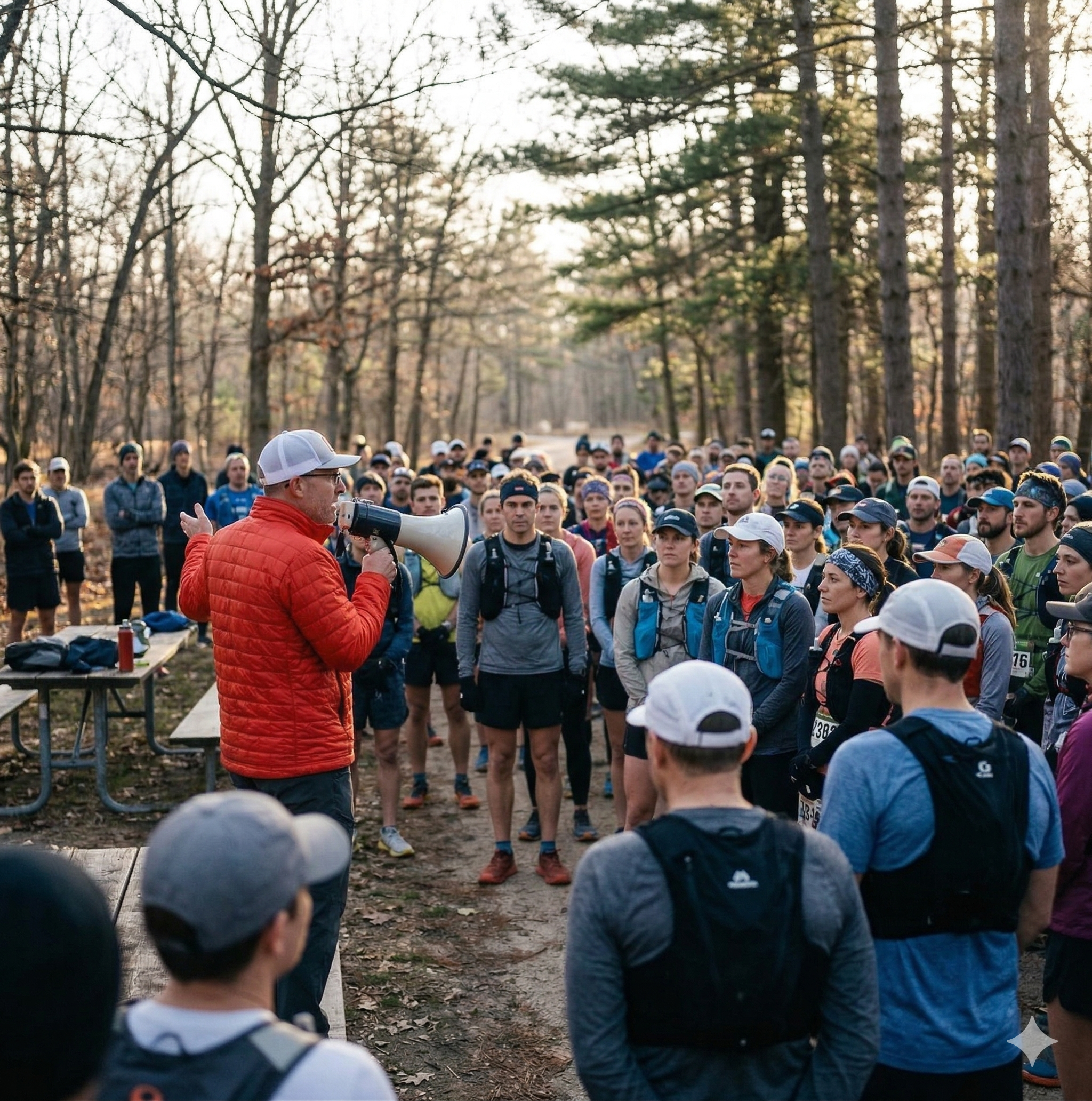
Final words of wisdom
When you toe the start line, you are probably thinking about your pacing, the weather, and whether you ate enough that morning.
I am thinking about whether that trail junction marker is still standing after last night's wind.
That is not a complaint. It is just the truth about what race directing actually looks like, and I think it is worth saying out loud.
It Starts Long Before You Register
By the time registration opens, months of work are already done.
Permits. Land management approvals. Insurance. Course design that balances challenge with safety. Conversations with park staff about timing, parking, and trail usage. Every event lives inside a framework of agreements, and those agreements take time to build.
None of that is visible to you on race morning. That is exactly how it should be. But it exists, and it matters.
The Course Is a Promise
When I mark a course, I am making a promise.
You are trusting me to get you out there and bring you back. You should not have to stop and wonder which way to go. You should not be guessing at a junction. That trust means I walk the course. I mark it. I walk it again. I check it the morning of the race with whatever time I have left before the start.
A well-marked course is invisible in the best way. Runners just run. When someone finishes and says the course was clear and easy to follow, that is not luck. That is hours of work done quietly before you arrived.
Race Week Is Its Own Category
The week before a race is something I cannot fully explain to people who have not been through it.
Volunteer coordination. Aid station inventory. Timing setup. Bib assignment. Athlete communication. Weather watching. Contingency planning. It is not a single task. It is dozens of tasks running simultaneously, some of which only show up on the list because something went sideways in a previous year.
Sleep gets shorter. The mental checklist gets longer.
And somewhere in the middle of all of it, I am excited. Genuinely excited. Because I know what's coming.
Race Morning Has Its Own Rhythm
I arrive early. The parking lot is dark and quiet. I start to set up. Gradually, cars begin to pull in.
I watch people get out, check their gear, stretch, and look around. Some are nervous. Some look like they have done this a hundred times. Some are doing both at once.
I try to talk to as many people as I can before the start. Not because I have to. Because that is what race day actually feels like when you have spent months thinking about nothing else. These people made time for this. Drove here. Trained for it. That means something.
The Moment I Say Go
There is a moment at the start line that I have thought about more than I can count, and it still catches me every time.
The group is gathered. The trail is waiting. Everyone is quiet.
I say go.
And just like that, months of planning become a race.
I watch the field move down the trail and into the trees, and for a few seconds, it all makes sense. The permits. The late nights. The weather checks at midnight. The course tape. All of it was building toward this.
Welcoming Them Back
If the start is where months of work get released, the finish is where the whole thing lands.
Watching runners come in is different every time. First-timers crossing the line and looking slightly stunned. Veterans who have been out there all day and still have something left to give. Last-place finishers who get the loudest cheer because everyone still out there knows exactly what it took.
I try to be at the finish for every single runner. That is not always easy when there are other things to manage. But it matters. You went out there and did the work. The least I can do is be there when you come back.
When It Works
The moments I carry with me are not the logistics wins. They are the human ones.
When someone says the course was well-marked, they never felt lost. When a first-timer finishes their 20 miles and is already talking about next year. When a runner who struggled through the middle miles crosses the line and lets out a sound that is somewhere between relief and joy.
Those moments do not happen without all the invisible work that precedes them. But they also cannot be manufactured. You just create the conditions and hope people rise to meet them.
They almost always do.
Why I Do It
Trail racing is a community effort, even when one person's name is on the permit.
Volunteers. Landowners. Runners who show up and treat the trails well. People who leave no trace and say thank you when they finish. All of it contributes to whether these events continue to exist.
My job is to hold the space. Plan the details. Mark the course. Say go. Welcome you home.
Everything in between is yours.
St. Croix Running Company hosts trail races throughout the year across western Wisconsin and the Twin Cities region. If you are interested in running or volunteering, check out the events page.